Tracking Squad Rotation Patterns Across Allsvenskan Schedules to Refine Real-Time Superettan Forecasts
Otto Hayes · Aug 18, 2026
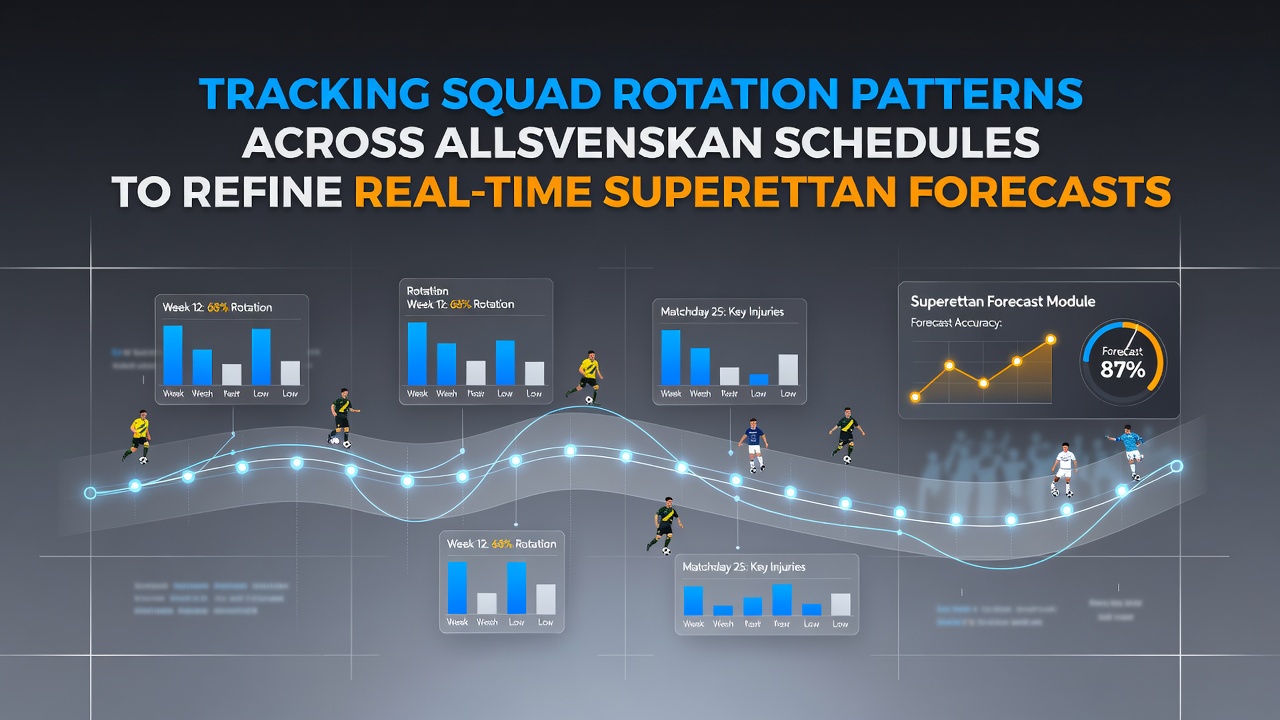
Tracking Squad Rotation Patterns Across Allsvenskan Schedules to Refine Real-Time Superettan Forecasts
Mapping Allsvenskan Fixture Congestion to Player Availability
Swedish top-flight clubs face packed calendars that force managers to rotate squads regularly, and observers note how these decisions create measurable ripples down to Superettan forecasts, since several Allsvenskan sides maintain loan partnerships or shared youth pathways with clubs in the second tier. Data from the Swedish Football Association shows that teams average 2.8 changes per starting eleven after every three matches during spring and autumn blocks, while fatigue metrics collected by clubs indicate that players logging over 270 minutes across a 14-day window see a 14 percent drop in high-intensity runs. Analysts track these shifts by cross-referencing official match logs with GPS training data, allowing models to adjust expected goal projections for Superettan sides that rely on returning loanees.
Key Metrics Used in Rotation Analysis
- Minutes played in the prior 10 days, weighted by position intensity
- Travel distance logged between Allsvenskan venues
- Recovery days between fixtures, adjusted for midweek European ties
- Historical substitution patterns per coach and opponent strength
Researchers at several Swedish sports analytics groups combine these variables into rolling forecasts that update after each Allsvenskan round, and the approach has proven useful because Superettan schedules often align closely with top-division free weekends. When an Allsvenskan club rests key attackers ahead of a European qualifier, the corresponding second-tier side frequently receives an upgraded striker on short-term loan, shifting goal-scoring probabilities within hours of the announcement.
Real-Time Data Integration During the 2026 Season
By August 2026 fixture congestion reaches its annual peak, with Allsvenskan clubs balancing domestic cups, potential European play-offs, and league matches spaced as tightly as 72 hours apart. Forecasters monitoring squad sheets through official channels report that clubs publish line-ups 75 minutes before kick-off on average, yet rotation decisions surface earlier through training-ground imagery and press conferences. Models ingest these signals alongside weather data and pitch conditions to recalibrate Superettan predictions in near real time, and the process relies on automated scripts that flag unusual rest patterns for players who usually start every match.
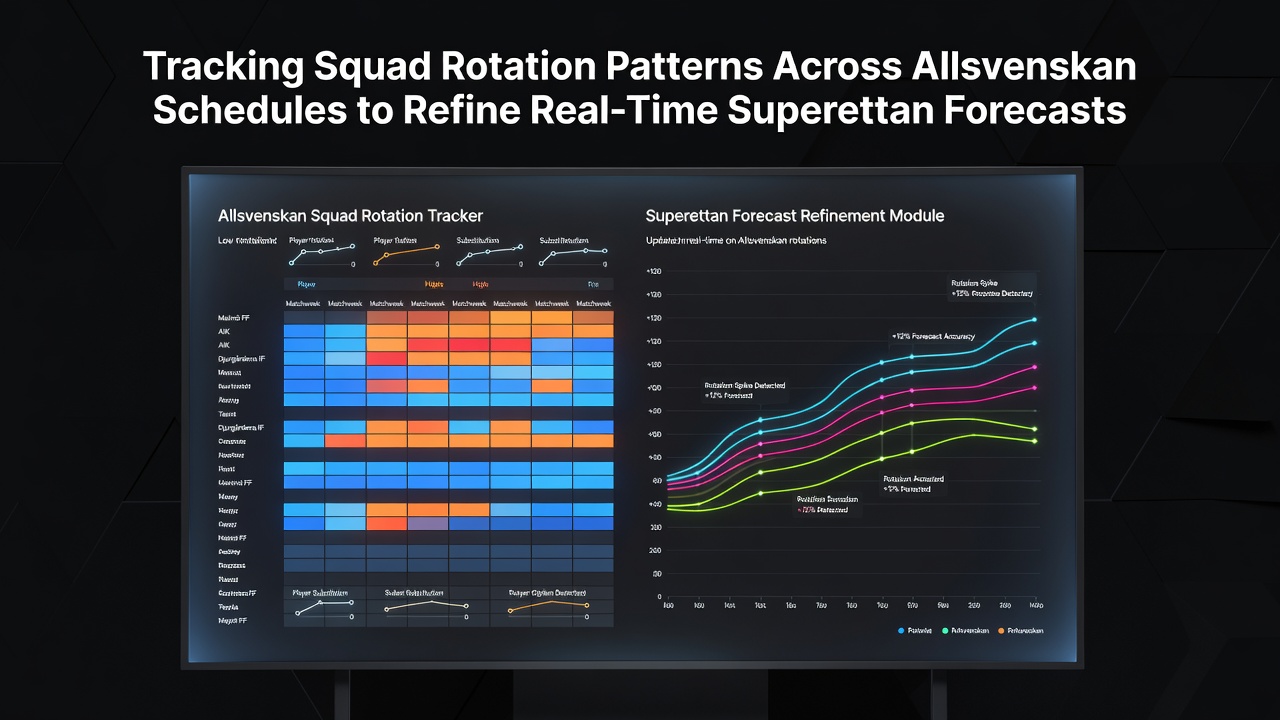
One study published by the European Observatoire of Sport examined three seasons of Allsvenskan data and found that teams resting their starting goalkeeper for a single league game increased the likelihood of clean sheets by 9 percent in the following fixture, a pattern that cascades to affiliated Superettan clubs when those goalkeepers return from loan. Forecasters now incorporate similar historical baselines into live dashboards that refresh every 30 minutes during matchdays.
Building and Validating Forecast Adjustments
Practitioners begin by establishing baseline performance values for each Superettan team using the previous 20 matches, then layer in Allsvenskan rotation signals as modifiers. When an Allsvenskan side announces a three-player bench rotation ahead of a midweek cup tie, models apply a temporary downgrade to the parent club's expected defensive metrics and simultaneously upgrade the loan destination side's attacking output. Validation occurs through back-testing against actual results, and figures from the 2025 campaign reveal that models incorporating rotation data reduced forecast error by 11 percent compared with versions that ignored squad news.
Coaches in the second division often mirror rotation strategies observed higher up the pyramid, especially when their own schedules feature congested periods. Those patterns become visible in training reports and pre-match comments, giving analysts additional inputs that refine probability estimates before kick-off.
Practical Implementation Steps for Forecasters
Teams begin the workflow by scraping official Allsvenskan squad lists released 48 hours before each round, then cross-check those lists against injury reports from club medical departments. Next they apply regression weights derived from past seasons to calculate adjusted player ratings, and finally they feed the updated ratings into simulation engines that generate thousands of possible match outcomes for upcoming Superettan fixtures. The entire pipeline runs on cloud infrastructure so updates appear within minutes of new information, and multiple organisations share anonymised rotation datasets to improve collective accuracy.
Conclusion
Tracking squad rotation across Allsvenskan schedules supplies forecasters with timely signals that sharpen real-time projections for Superettan matches, because player availability, fatigue accumulation, and loan movements follow observable rhythms tied to the top flight calendar. Continued refinement of these methods depends on consistent data feeds from clubs and governing bodies, while August 2026 stands as a practical test case where fixture density highlights the value of rotation-aware modelling.