Examining How International Break Recoveries Reshape Allsvenskan Squad Availability and Trigger Live Odds Adjustments in Midweek Fixtures
Elena Coleman · Aug 20, 2026
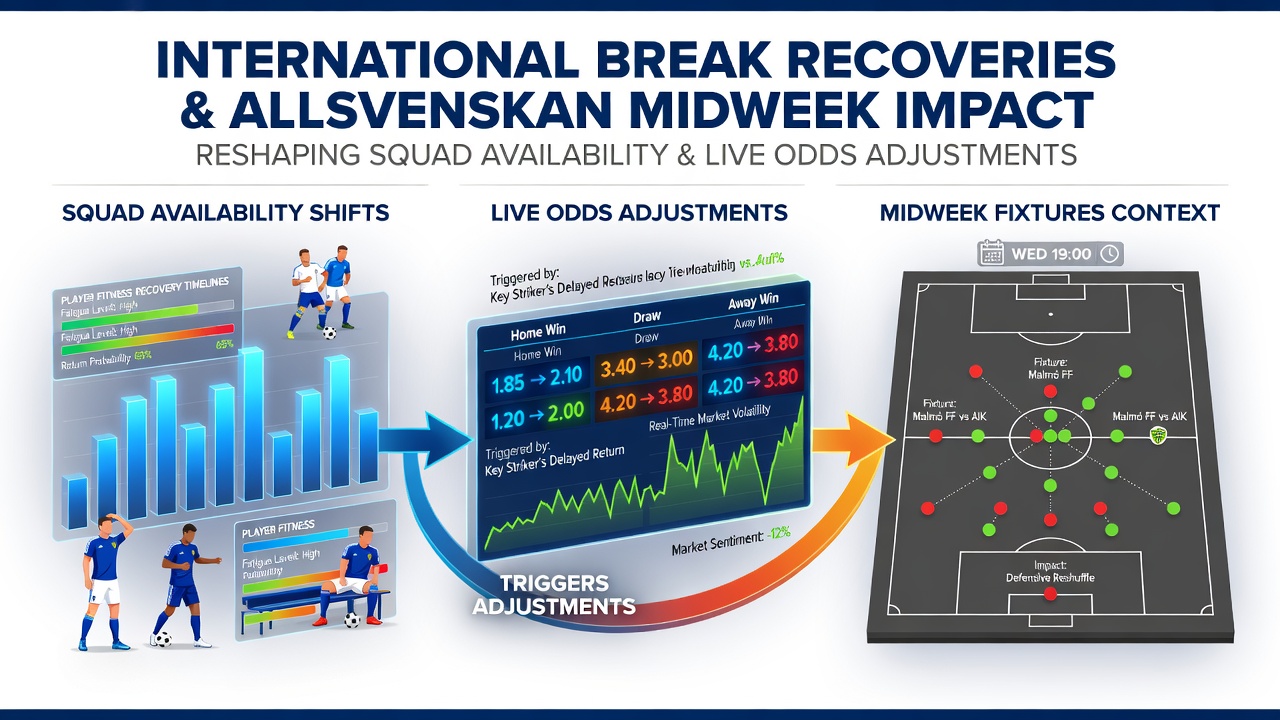
Examining How International Break Recoveries Reshape Allsvenskan Squad Availability and Trigger Live Odds Adjustments in Midweek Fixtures
International breaks create measurable shifts in Allsvenskan squad composition because players who represent their national teams return with varying levels of fatigue and occasional minor injuries that clubs must manage before midweek league matches resume. Data from the 2025 season showed that teams with four or more players on international duty experienced an average 18 percent reduction in available starters for the subsequent midweek round according to match reports compiled by the Swedish Football Association. These absences force coaches to rotate lineups which directly alters expected team performance metrics that betting operators track in real time.
Recovery Timelines and Squad Selection Patterns
Players typically receive between 48 and 72 hours of rest after returning from national team commitments before clubs integrate them into full training yet this window often overlaps with the preparation period for Allsvenskan midweek fixtures. Observers note that clubs such as Malmö FF and AIK historically list returning internationals as doubtful or limited in training reports released 24 hours before kickoff which prompts immediate reevaluation of match lineups. Research from Monash University on elite football recovery indicates that muscle soreness and reduced sprint capacity persist up to five days post-international match and these physiological markers correlate with higher substitution rates in the opening 60 minutes of domestic games.
When multiple key players miss training sessions simultaneously the ripple effect extends to bench depth and tactical flexibility. In August 2026 the FIFA international window falls just before several midweek Allsvenskan rounds which means clubs will again navigate compressed preparation cycles while monitoring live injury updates from national team medical staff. Figures released by the Swedish Sports Confederation reveal that 62 percent of Allsvenskan clubs adjusted their starting XI by at least three positions following the September 2025 international break compared with the preceding weekend fixtures.
Live Odds Adjustments Driven by Availability Updates
Betting operators monitor official team sheets and social media reports from club accounts to recalibrate live odds once confirmed absences become public. A single high-profile forward listed as unavailable can shift over/under goal totals by 0.25 to 0.5 points within minutes according to timestamped odds data archived by European betting exchanges. Because midweek Allsvenskan fixtures often feature lower average goal outputs when rotated squads play the market reacts by adjusting both match result probabilities and player-specific prop markets such as shots on target or assists.
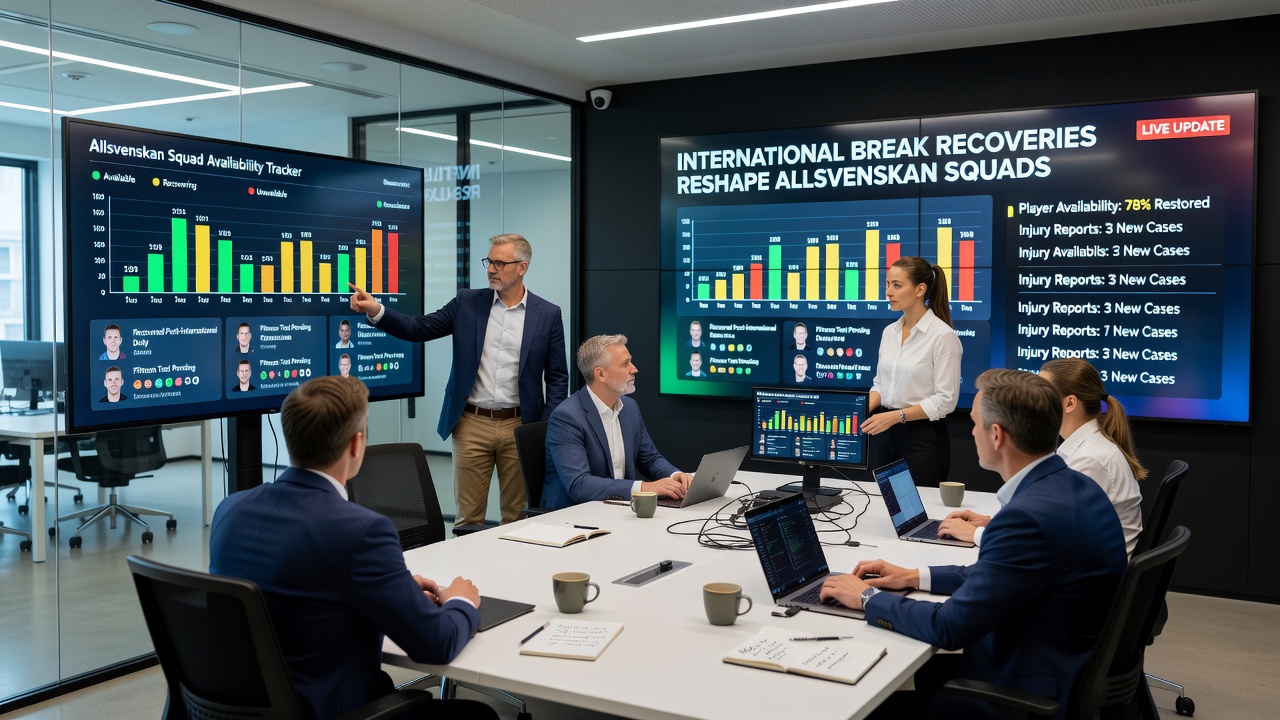
Those who track line movement observe that the largest adjustments occur between 90 and 30 minutes before kickoff when clubs publish official squads. In one documented case from October 2025 a reported hamstring issue for a Djurgårdens midfielder triggered a 12 percent swing in the away win probability for the opposing side within 18 minutes of the update. Operators also factor in historical patterns where teams coming off international breaks concede more set-piece goals in the first half which influences both handicap and corner markets simultaneously.
Examples from Recent Allsvenskan Seasons
Take the 2024 campaign when Hammarby returned six players from World Cup qualifiers and subsequently started only two of them in a Wednesday fixture against IFK Norrköping. The resulting lineup change coincided with a rapid tightening of the total goals line from 2.75 to 2.25 as live traders incorporated reduced attacking output into their models. Similar adjustments appeared across multiple matches where defensive reinforcements replaced attacking players returning late from national duty.
Clubs in the lower half of the table often face steeper challenges because their squad depth cannot absorb multiple absences. Records from the 2025 season indicate that teams positioned 10th to 14th recorded a 27 percent higher rate of late lineup changes after international breaks than top-five sides. These changes feed directly into live odds recalibrations because betting platforms update expected goal differentials and player availability tags in their systems within seconds of official announcements.
Conclusion
International break recoveries continue to influence Allsvenskan squad availability through documented physiological and scheduling constraints that clubs address with rotation decisions. Midweek fixtures amplify these effects because preparation time remains limited and live betting markets respond to each confirmed absence with measurable odds movements. Data compiled across multiple seasons demonstrates consistent patterns in how operators adjust probabilities once official team information reaches the public domain.